
Elle Watts
Founder & Lead Aesthetics Specialist, Visage Medispa
Medically reviewed by Elle Watts, Founder & Lead Aesthetics Specialist, Visage Medispa. Last reviewed 11 March 2026.
Few treatments transform a face as completely as a well-executed tear trough correction. Few treatments go as badly wrong when they are not. Here is what to understand before you book.
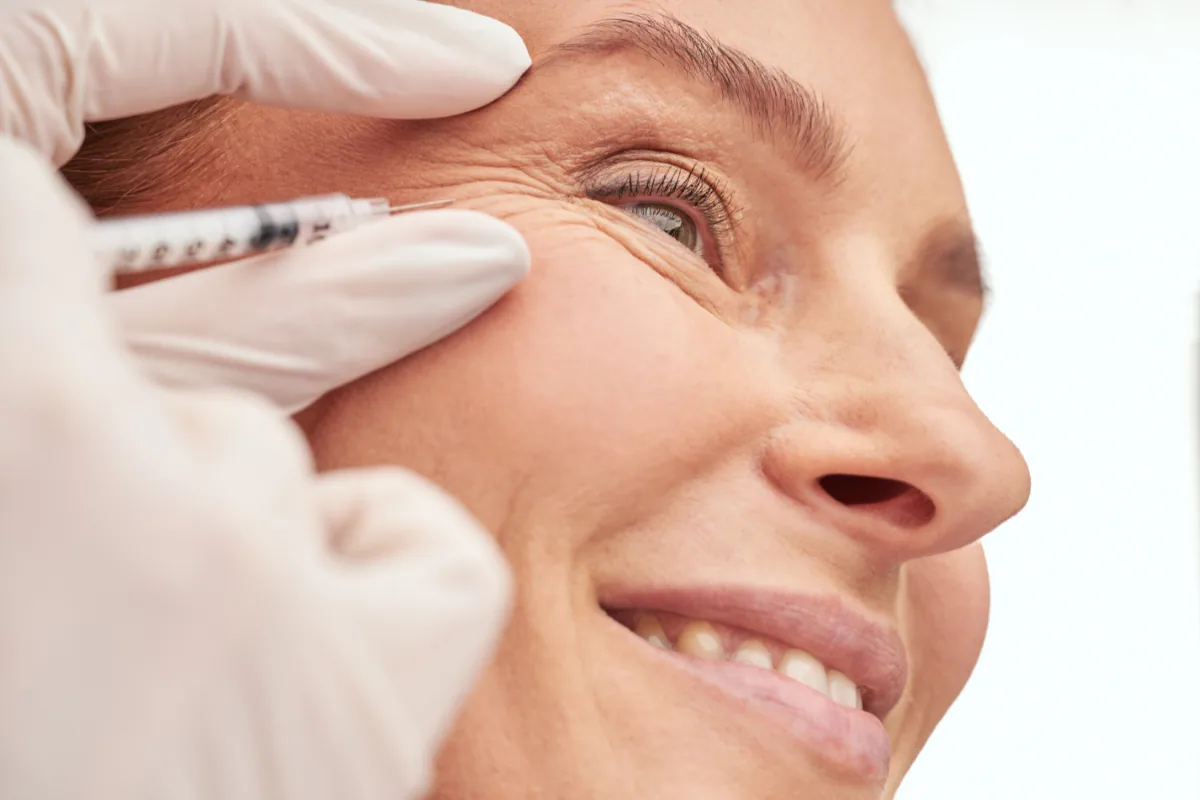
The tear trough, the hollow that runs from the inner corner of the eye outwards along the orbital rim, is, in our view, the most demanding area on the entire face to treat with dermal filler. It is also one of the most commonly mistreated, partly because it is a high-impact area that generates dramatic before-and-afters, and partly because many injectors who would not dream of attempting it have begun doing so anyway.
The anatomy here is unforgiving. The skin is the thinnest on the face. The musculature is superficial. Major blood vessels, including branches of the ophthalmic artery, run close to the injection site, which is why vascular complications in this area can, in the worst cases, threaten vision. The tissue is unusually prone to retaining product, which can result in puffy, swollen, blue-tinged 'malar mounds' that take years to resolve and may require dissolving and starting again.
A genuine tear-trough specialist will spend more time talking you out of the treatment than into it. The ideal candidate has true volume loss, a visible hollow when the face is at rest, not simply dark circles caused by pigmentation, allergies, fat protrusion or thin overlying skin. For patients whose primary issue is thin under-eye skin rather than hollowing, our sunken-eyes overview outlines several non-filler approaches that often suit better. Patients with significant skin laxity or those over a certain age may achieve better results with surgical blepharoplasty than with filler.
When the indication is right, the technique still matters enormously. We use cannula rather than needle wherever possible, place product deep on the bone rather than superficially, and use small volumes, typically 0.3 to 0.6ml per side. We never overcorrect. We bring patients back at two weeks to assess, and we add more only if needed.
If you have been told you are a candidate for tear-trough filler after a fifteen-minute consultation by a practitioner who is also offering you lip filler in the same appointment, we would urge you, gently but firmly, to seek a second opinion. The good news is that genuinely qualified injectors are not difficult to find in Weybridge, Cobham or the wider Surrey area. The bad news is that not all of the people offering this treatment qualify.
Done well, tear-trough correction is one of the most rewarding treatments in aesthetics. Done badly, it is one of the most regretted. Choose your injector with the seriousness the anatomy deserves.
Ready to begin?
Book a complimentary consultation
Speak with one of our practitioners about the treatments discussed in this article.