Gemma Edwards
Senior Therapist, Visage Medispa
Medically reviewed by Elle Watts, Founder & Lead Aesthetics Specialist, Visage Medispa. Last reviewed 18 February 2026.
Patients across Weybridge and Surrey routinely ask us to choose between these two treatments. The truthful answer is that neither is universally better. They solve overlapping but distinct problems. Here is how we decide.
Microneedling has been a cornerstone of professional skin treatment for over a decade. RF microneedling, sometimes branded as Morpheus8, Dermaforce, Sylfirm X, Secret RF and others, is its more recent, more powerful relative. The two treatments are often discussed interchangeably in salon marketing. They should not be. The mechanism, the depth of effect, the downtime and the ideal patient profile differ meaningfully.
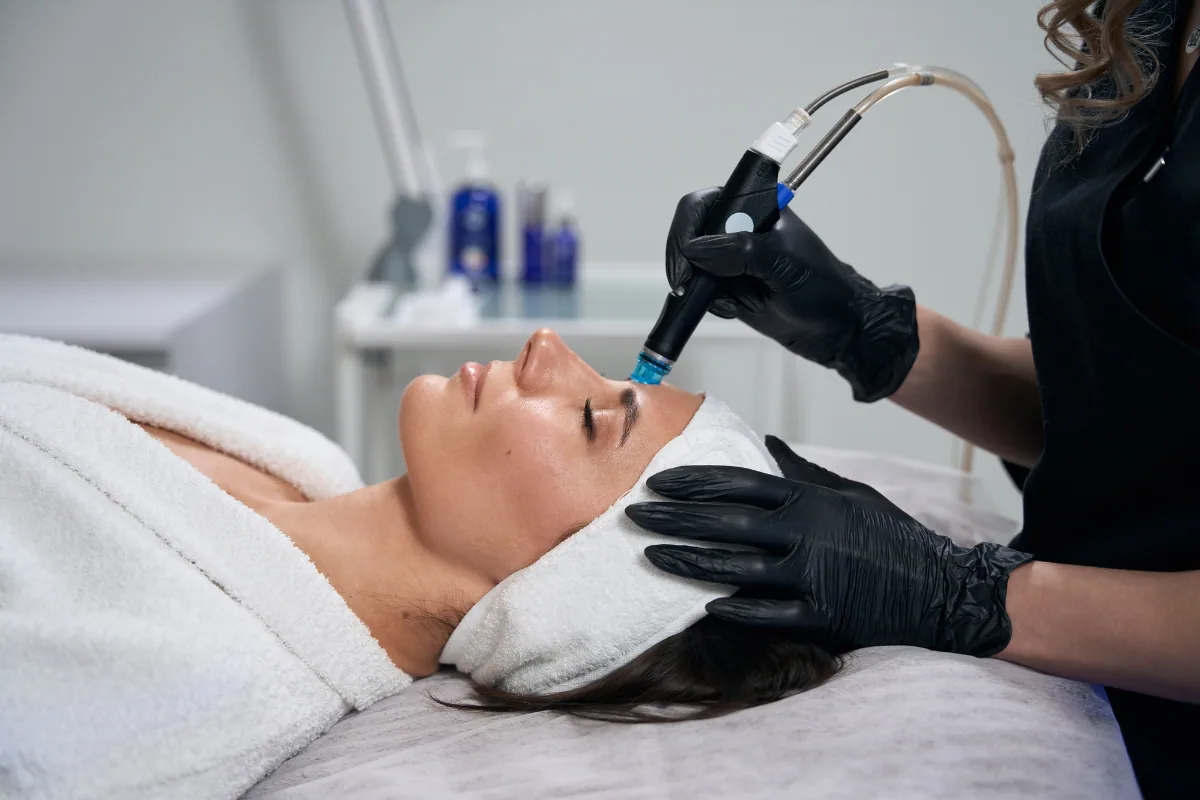
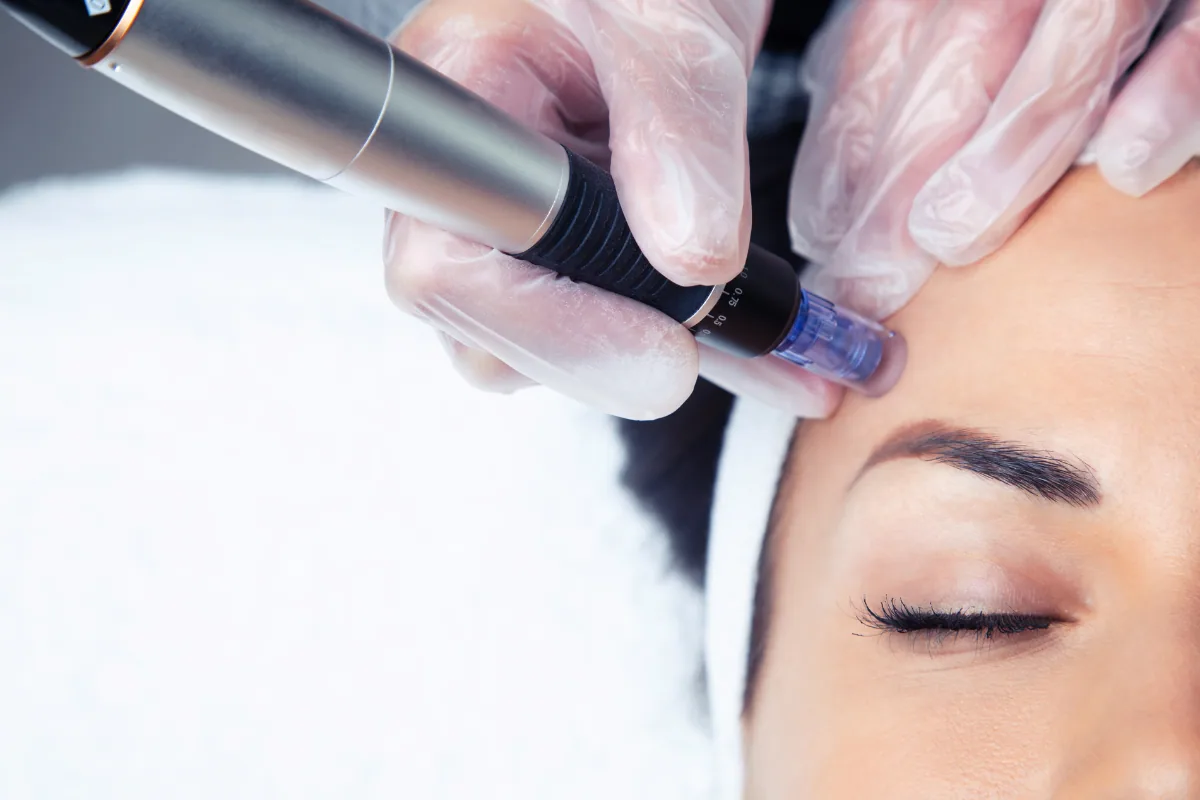
Traditional microneedling uses a controlled array of fine needles to create thousands of micro-channels in the upper dermis. The skin perceives these channels as injuries and initiates a wound-healing cascade that includes increased collagen and elastin production over the following weeks. It is excellent for general skin quality, mild scarring, fine lines and overall texture. It is comfortable, has limited downtime, and produces gentle, cumulative improvements over a course of three to six sessions.
RF microneedling adds a second mechanism: as the needles reach a programmed depth, they deliver radio-frequency energy directly into the deeper layers of the skin. This energy creates controlled thermal injury in the dermis, which the body again repairs with new collagen and elastin, but with more visible effect. RF microneedling can address moderate-to-deep acne scarring, mild skin laxity, large pores, and the early signs of jowling in a way that needling alone cannot match.
The trade-off is intensity. RF treatments require topical anaesthetic, produce more pronounced redness lasting 24 to 72 hours, and may show a temporary 'grid pattern' from the device tip for several days. Most patients schedule them with a clear five-to-seven-day window before any major social event. Traditional microneedling, by contrast, can be done on a Friday with no visible trace by Monday morning.
How we choose between them at Visage comes down to three questions: What is the indication? How much downtime can you accommodate? And how aggressive a result do you want? For a patient in her early thirties wanting brighter, smoother skin and willing to commit to maintenance, traditional microneedling is often the ideal answer. For a patient in her forties or fifties with mild laxity and visible texture changes, RF microneedling generally offers more transformative value per session.
Both treatments respond particularly well to combination with growth factor or polynucleotide infusions immediately afterwards, while the micro-channels are open. We design these protocols individually rather than as standardised packages, because no two skins, and no two schedules, are identical.
Ready to begin?
Book a complimentary consultation
Speak with one of our practitioners about the treatments discussed in this article.