
Gemma Edwards
Senior Therapist, Visage Medispa
Medically reviewed by Elle Watts, Founder & Lead Aesthetics Specialist, Visage Medispa. Last reviewed 28 November 2024.
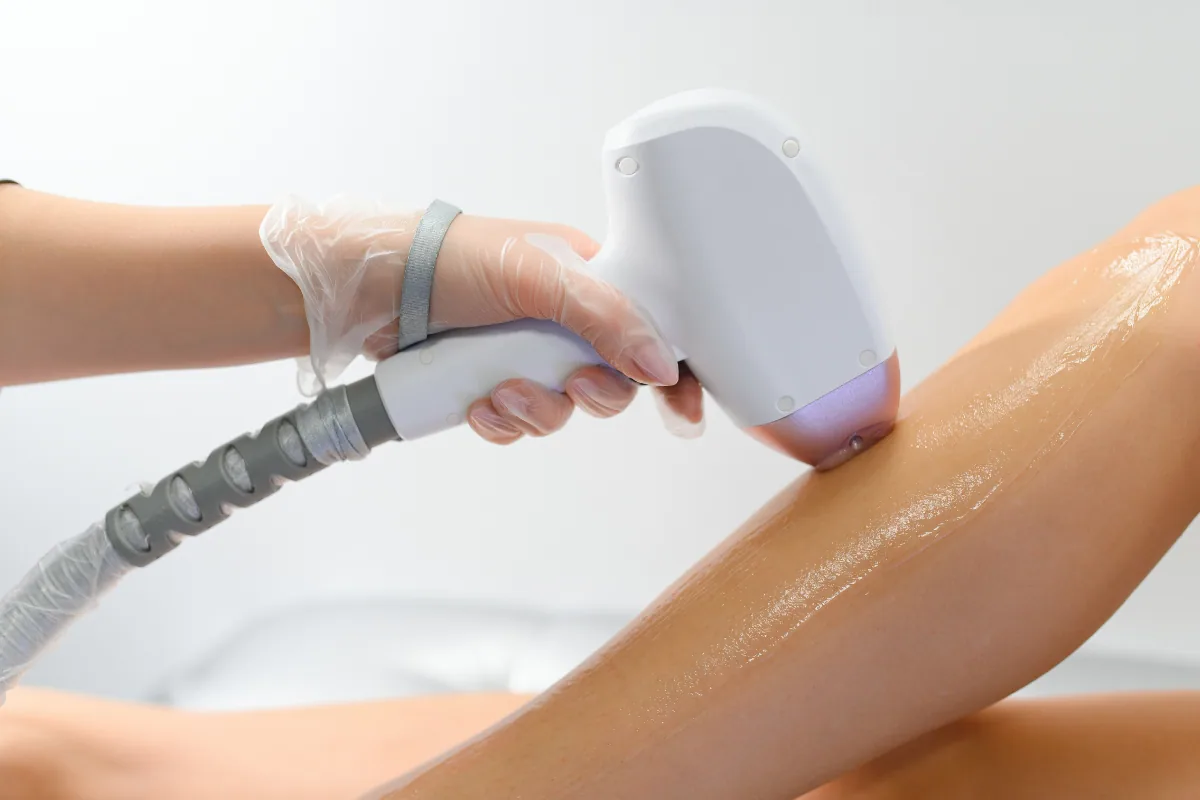
Laser hair removal is one of the most clinically proven treatments in aesthetics. Understanding the biology behind it makes it easier to commit to the process, and to manage expectations sensibly.
Laser hair removal is not magic. It is photothermolysis, the targeted destruction of a specific biological structure using precisely calibrated light energy. Understanding the process makes it far easier to undergo the treatment with realistic expectations and appropriate patience.
Hair grows in cycles: anagen (active growth), catagen (transition) and telogen (resting). Laser energy works by targeting melanin, the pigment in hair, and converting it to heat. That heat travels down the hair shaft and damages the follicle, impairing its ability to grow new hair. The critical limitation: this process only works when the hair is in the anagen phase, when the shaft is still physically connected to the follicle.
At any given time, only a proportion of your body hair is in the anagen phase. This is why a single session produces some reduction but not complete clearance. Multiple sessions, typically six to eight, spaced four to eight weeks apart depending on the body area, are required to catch each follicle during its active phase.
The most common patient question after the first session is: 'why is it not working?' What is actually happening is that the treated hairs are being shed over the following two to three weeks. The skin may look unchanged immediately post-treatment. Patience between sessions is not a passive experience. The biology is actively resolving.
Pain levels are highly individual and area-dependent. Most patients describe the sensation as a warm rubber band snap. At Visage, we use professional-grade cooling throughout to minimise discomfort, and our devices are calibrated precisely to skin tone and hair colour to maximise safety and efficacy.
Maintenance sessions once or twice a year are recommended following the primary course, as hormonal changes can occasionally reactivate dormant follicles. The investment pays dividends over a lifetime spent free from razors, wax strips and ingrown hairs.
Ready to begin?
Book a complimentary consultation
Speak with one of our practitioners about the treatments discussed in this article.